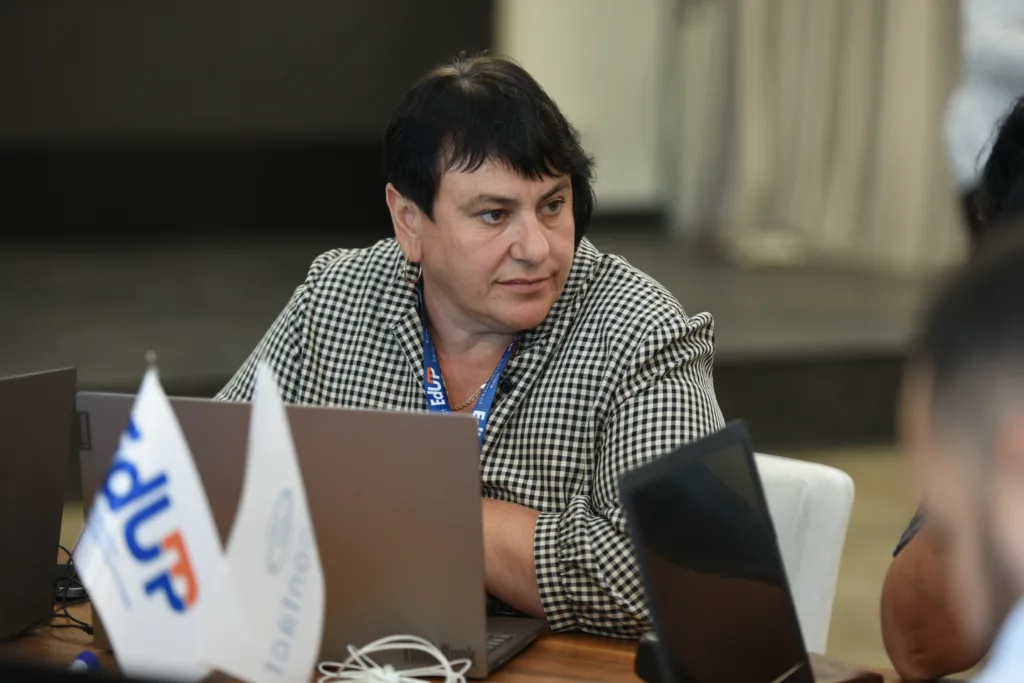
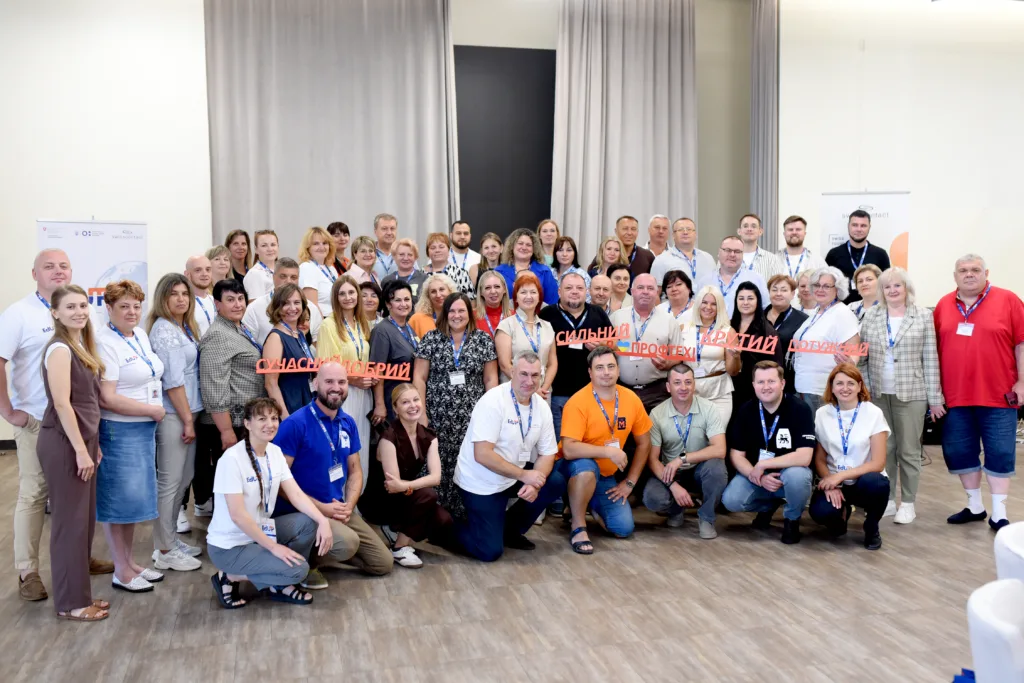
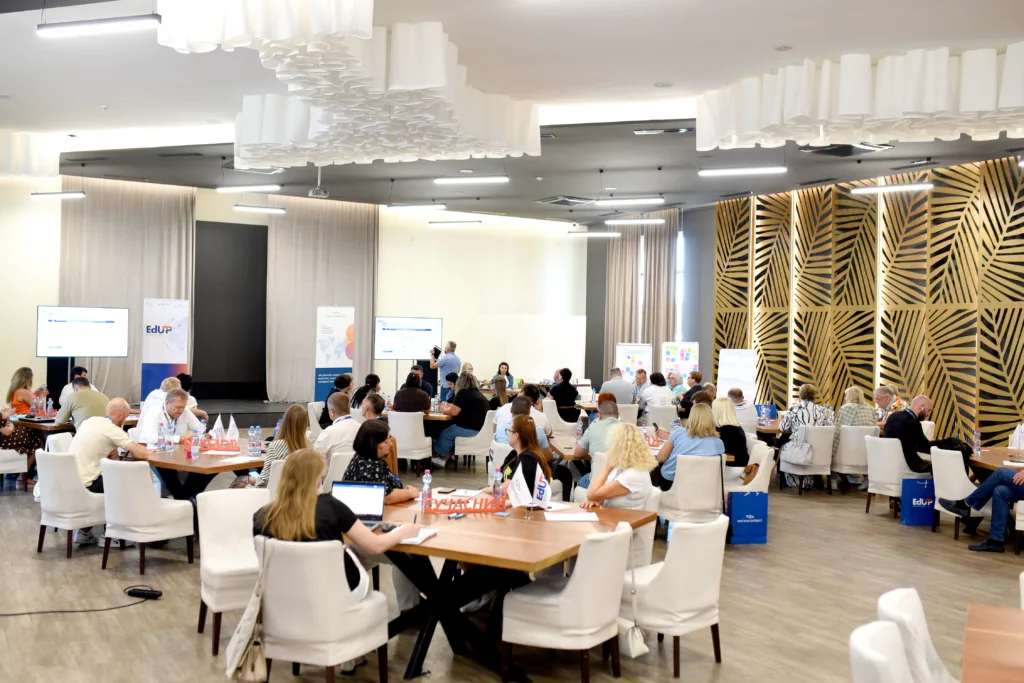
Summer School 2026 in Rivne brought together managers of vocational education institutions to share new knowledge and skills ahead of the academic year.
Traditionally, the School programme consisted of topics that require the most attention and are in greatest demand among the project’s partner colleges.
This year, these were:
- artificial intelligence and its use in the management and financial activities of an institution;
- financial management of vocational education institutions under the new legislation.
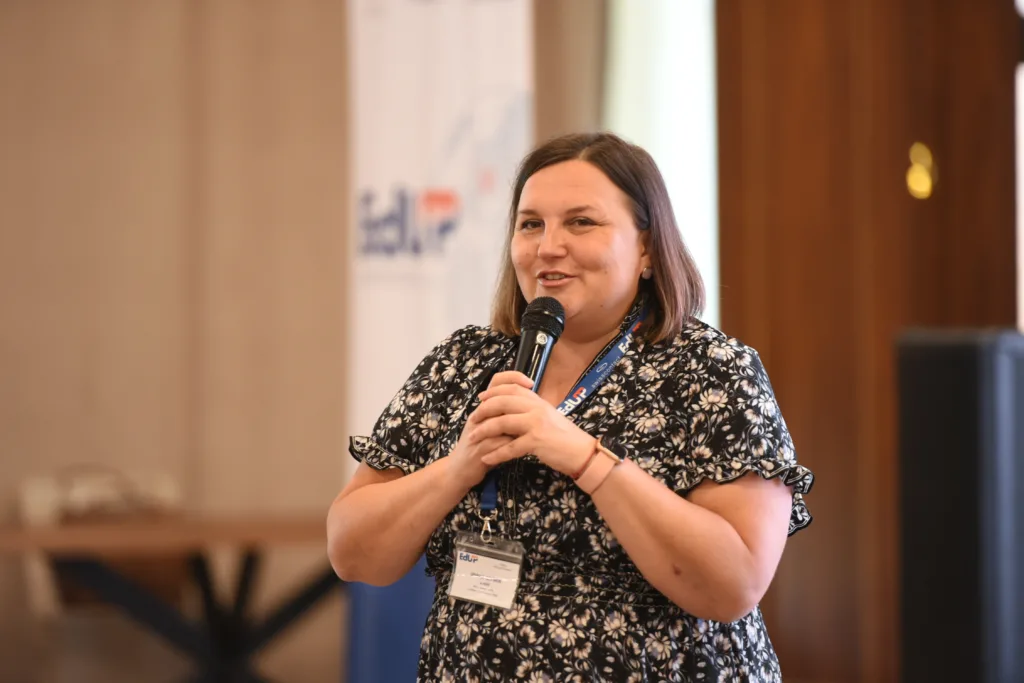
“The Summer School is a powerful platform for the systematic development of the professional potential of education managers, exchange of experience, development of partnerships and joint initiatives. Every year, we carefully study the needs of vocational education institutions, identify the topics for which there is the greatest demand, and design the programme so that directors, deputy directors, heads of Career Development Centres, and, this year, accountants of the institutions receive up-to-date knowledge and practical skills that they can apply in their work the very next day.”
Yuliia Yepifanova, EdUP Project Manager
The training lasted three days with the participation of representatives of the Ministry of Education and Science of Ukraine and the Department of Education and Science of the Rivne Regional State Administration.
“Today, managers of institutions face additional requirements dictated by modern society and the changing role of vocational education institutions. It is extremely important for educators to have skills in project management, financial literacy, and positioning themselves in the labour market. The use of AI is also among the basic skills. Therefore, directors need to continuously improve their competencies, and the Summer School, where leading trainers work with representatives of institutions, is a format that demonstrates effectiveness and results.”
Iryna Shumik, Director General of the Directorate of Vocational Education, Ministry of Education and Science of Ukraine
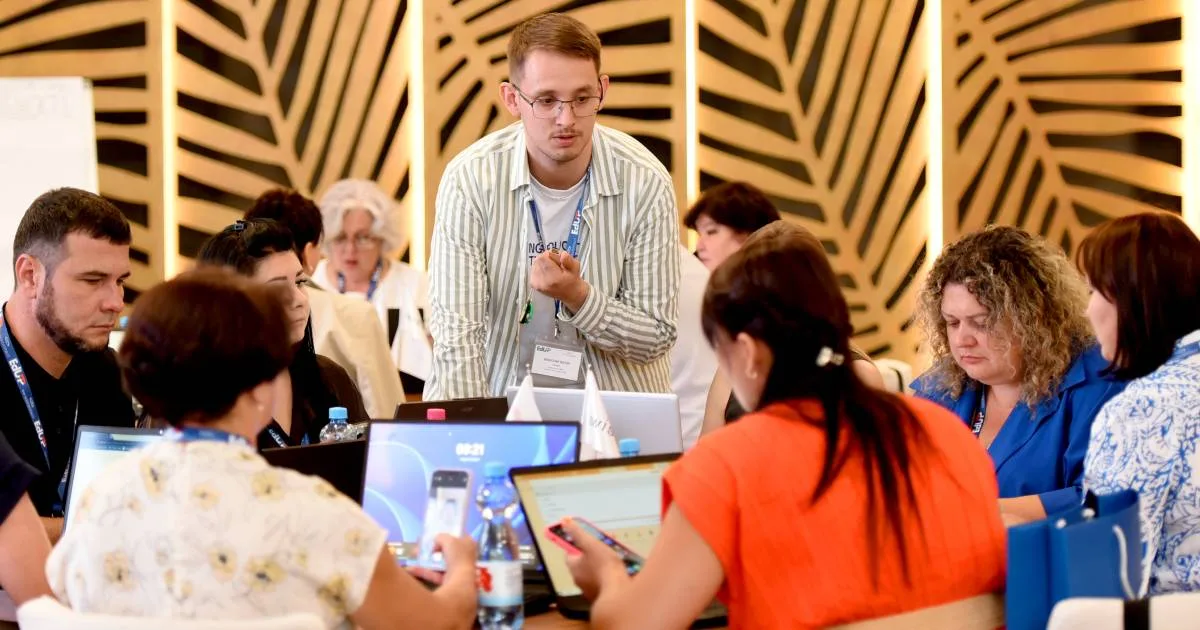
The first day of the training was dedicated to working with various AI tools and ways of using them that can be adapted to the needs of educators. Participants worked on specific tasks and real-life examples under the guidance of trainers Maksym Valin, AI architect, education consultant, trainer and developer of AI solutions for education, and Vasyl Oryshchuk, AI and digital skills trainer, PhD, and developer of training programmes.
“AI tools today are very helpful for educators in the context of heavy workloads, increased demand for innovative approaches, and the overall transformation of education. Being able to use them is no longer something exceptional; it simply allows educators to maintain a basic level of effectiveness under these conditions. We can also see this among the participants: rather than ‘starting from scratch’, we are helping them update and strengthen the AI skills they have already acquired independently.”
Maksym Valin, the trainer
Vasyl Oryshchuk adds that education is currently not standing aside from the overall digitalisation taking place in our country, so it is important to intensively prepare teachers and managers of educational institutions for changes that will be irreversible.
“It is important that AI and other related issues do not simply remain at a basic level but are implemented systematically. Therefore, such training brings us closer to developing AI policies not only in universities but also in colleges.”
Vasyl Oryshchuk, the trainer
On the second day of the training, the programme focused on modern financial management tools and the financial model for institutional development. The training covered key legislative changes in this area, which, in particular, open up new opportunities for financial autonomy for vocational education institutions. Participants worked with practical cases, analysed real management situations and received ready-made solutions for implementation in their institutions.
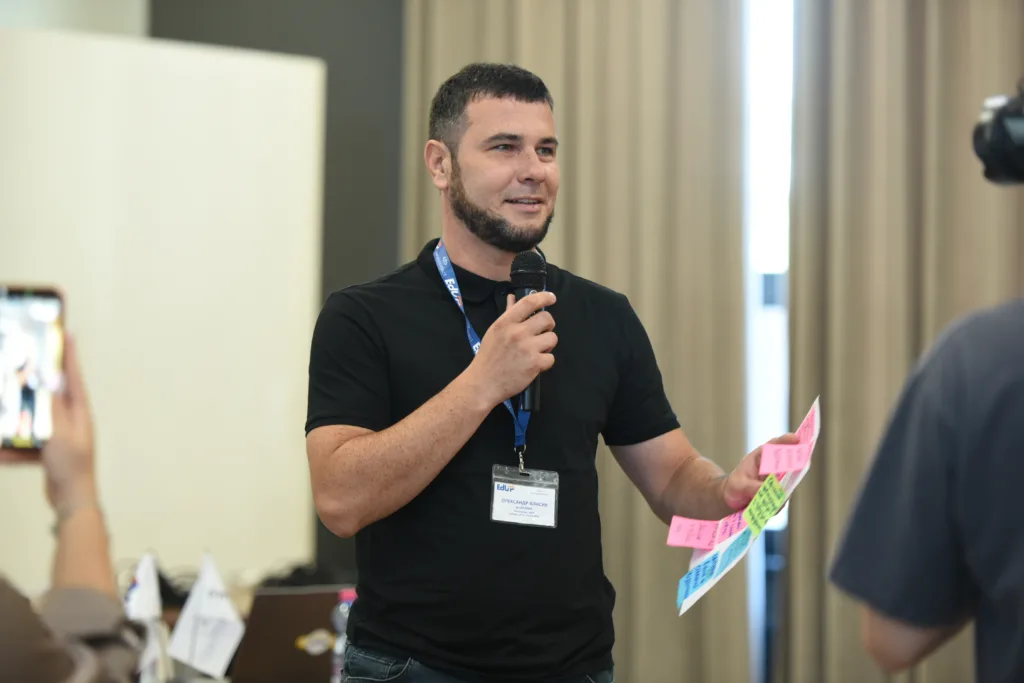
“At the moment, my use of AI tools is at a fairly basic level. But I understand that better command of such tools opens up more opportunities for me as an educator. So, such training sessions are very helpful and allow me to pass on more knowledge to students. I teach the subject ‘Civic Education’ at the college and, for example, we often use AI to create various quizzes, which students really enjoy.”
Oleksandr Vlasyk, Director of Svaliava Vocational College
“For me, it was very valuable to discover so many AI tools that can be useful in the work of an accountant, as well as to learn more about the new formula for financing institutions. We are looking forward to these changes, as they will improve the situation for students and institutions that are active. It was also interesting to communicate with colleagues from other institutions, and now we will stay in touch with them.”
Hanna Rymarchuk, Chief Accountant of Higher Vocational School No. 29, Volodymyrets
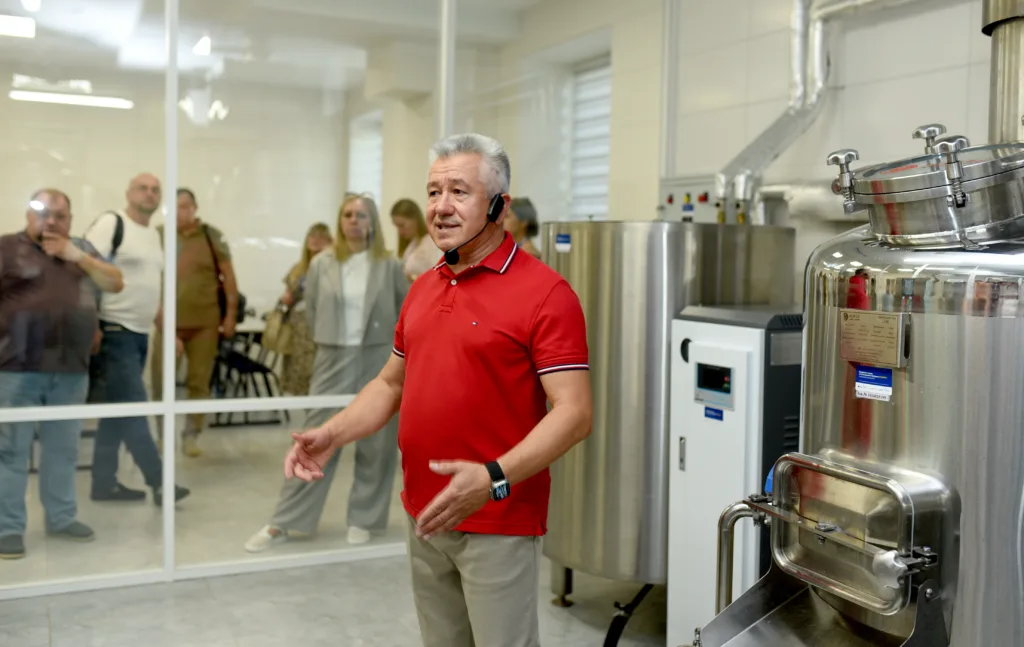
The Summer School concluded with a study visit to the Rivne Vocational College of Restaurant and Hotel Business, moderated by one of the School’s trainers, Petro Korzhevskyi, Director of the Department of Education and Science of the Rivne Regional State Administration. Here, using a specific institution as an example, the School participants learned more about successful practices in developing facilities and equipment, attracting investment and grant resources.
“The Project Schools are not a one-off educational event, but a systematic initiative based on researching the professional competencies of a modern education manager, involving practice-oriented experts and trainers, and consistently supporting the implementation of the acquired knowledge and skills in the work of educational institutions. It is precisely this approach that makes it possible to achieve not a short-term effect but sustainable results that strengthen education management teams and contribute to the development of the vocational education system in Ukraine.”
Yuliia Yepifanova, EdUP Project Manager
We thank the School trainers for their expertise and inspiration — Petro Korzhevskyi, Serhii Prytamanov, Valentyna Bondarchuk, Liudmyla Hoshko, Maksym Valin and Vasyl Oryshchuk.