
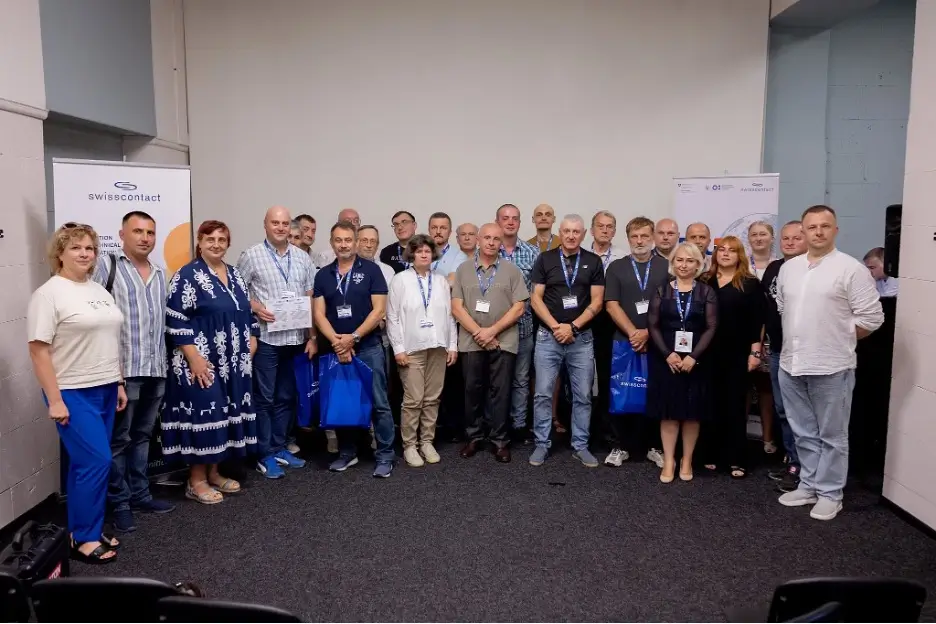
Labour shortages have become one of the key challenges facing Ukraine’s economy. While businesses are searching for qualified employees, thousands of Ukrainian adults need opportunities to learn a new profession, adapt their previous experience to current conditions, and return to stable employment.
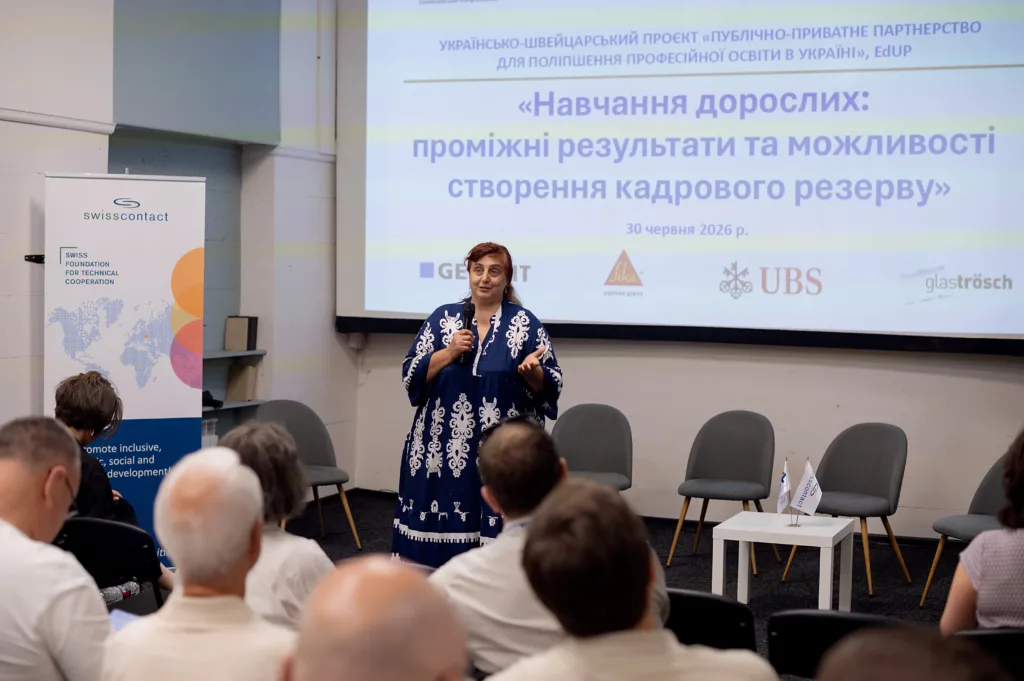
How these needs can be connected and how an effective pathway from education to employment can be built were discussed in Kyiv on 30 June during the event “Adult Education: Interim Results and Opportunities for Building a Talent Pool.”
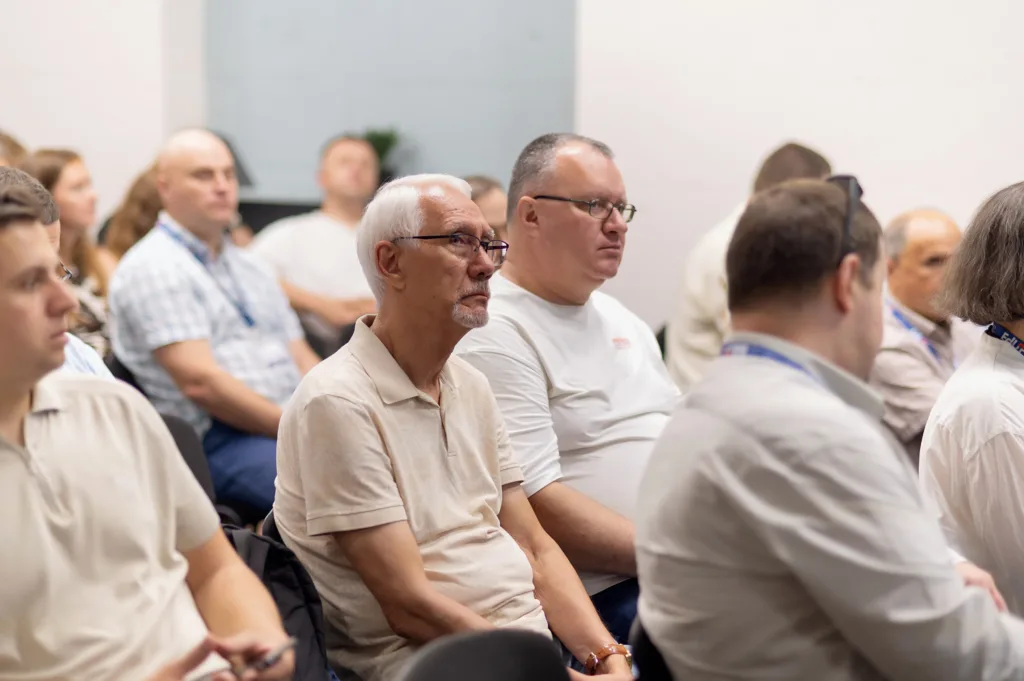
The event was held within the Coaching and Education for Employment in Ukraine component of the EdUP project, “Public-Private Partnership for Improved Vocational Education in Ukraine.” It brought together representatives of public institutions, the employment service, businesses, vocational education and training institutions, civil society organisations, the expert community, as well as graduates of adult education programmes.
“After several years of working in Ukraine, I have seen that the best results are achieved when businesses are involved throughout the entire training cycle: helping to identify the competencies in demand, participating in programme development, providing equipment, opening production facilities for practical training, and employing graduates.
Ukraine’s labour market is changing rapidly under the impact of the war. This is why the government, vocational education institutions, the employment service, international partners, and the private sector must work together. Ukraine’s recovery requires people with relevant practical skills, and our task is to create a clear pathway for them from education to stable employment,” said Poshan Bahadur KC, Country Director of Swisscontact in Ukraine.
Programme results and a new partnership with AGROMAT DECOR PLUS LLC
The interim results of the component were presented by its Head, Yana Kochugura. Adult education is currently delivered through partner vocational education and training institutions in Kyiv, Kharkiv, Lviv, Odesa, and Mykolaiv.
The programmes are designed in line with regional workforce needs and employers’ requests. Participants train in workshops, use modern equipment, and complete tasks that closely reflect real working conditions.
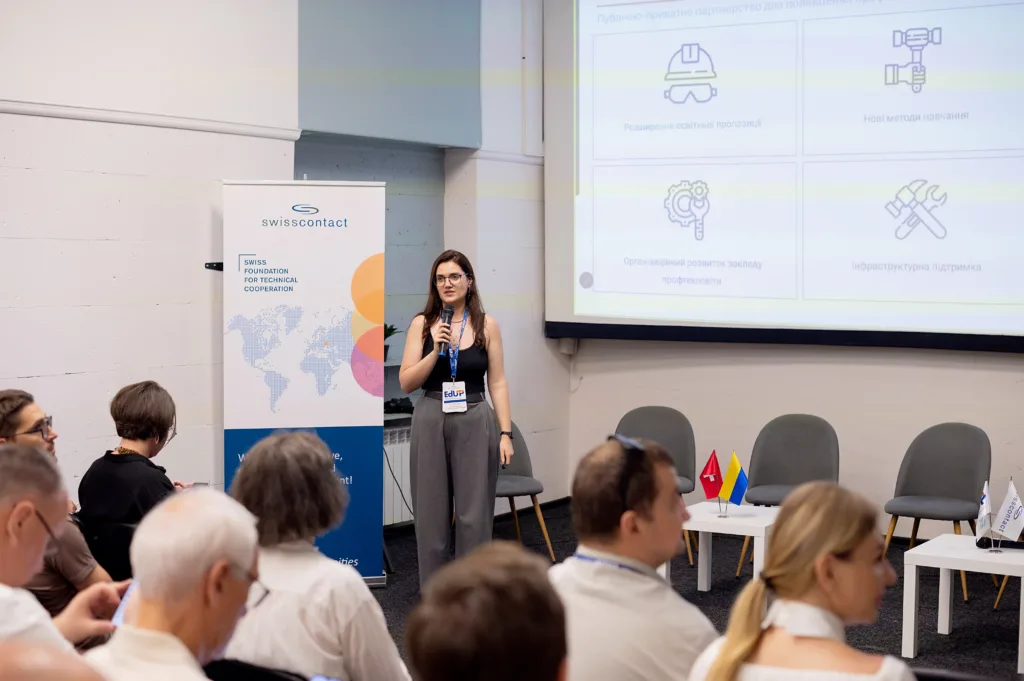
Alongside vocational training modules, participants receive career coaching, develop job-search skills, and access psychosocial support. This format is particularly important for internally displaced people, veterans, women, persons with disabilities, and those who have lost their jobs because of the war.
A practical continuation of the discussion on employers’ involvement was the signing of a Memorandum of Cooperation between Swisscontact Ukraine and AGROMAT DECOR PLUS LLC.
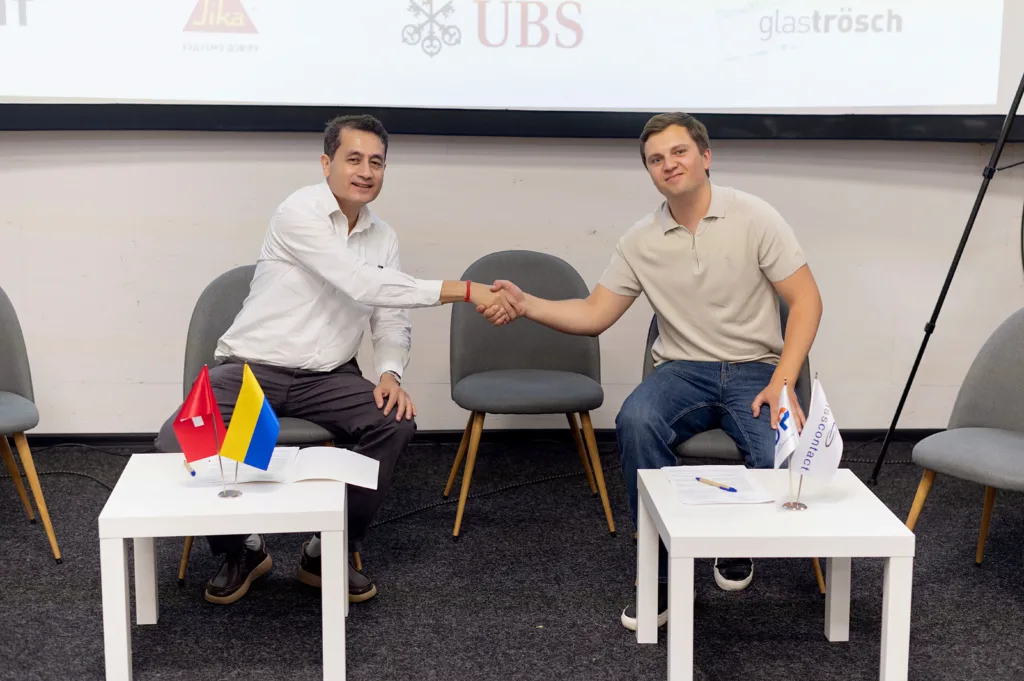
The partnership establishes a foundation for systematic cooperation between businesses and vocational education and training institutions. It includes joint educational and practical activities, the involvement of company experts in discussions on the content of vocational training, the exchange of up-to-date industry information, and the promotion of modern teaching approaches.
This cooperation will help education institutions respond more effectively to labour market needs and enable participants to gain relevant knowledge and practical skills.
The question of how individual partnerships can be transformed into a systemic workforce development model became the central focus of the panel discussion “Professional Adaptation and Retraining of Vulnerable Groups: Cross-Sectoral Cooperation and Practical Experience.”
Who can become part of the talent pool for Ukrainian businesses?
The discussion focused on groups that can already help businesses address their workforce needs: women, veterans, internally displaced people, persons with disabilities, and older professionals.
Denys Darmostuk, Director of the Kyiv Regional Employment Centre, noted that labour shortages are increasingly prompting employers to reconsider stereotypes surrounding technical occupations and skilled trades:
“Today, women are training as motor vehicle drivers, milling machine operators, electric and gas welders, and boiler operators. An employer identifies a staffing need and contacts the employment service, and we can finance the relevant training.
Fifty women have already completed such training and are now employed. The number is still relatively small, but the programme demonstrates that the mechanism works and can help businesses partially meet their workforce needs.”
According to him, the effectiveness of such programmes should be assessed not by the number of certificates issued, but by whether people remain in their new jobs.
“Under certain programmes, the average duration of employment is approximately eighteen months. This means that people are not taking jobs formally for only a few months. They remain in their positions and continue their professional development,” Denys Darmostuk added.

At the same time, training alone may not be sufficient for someone who has experienced displacement, job loss, a prolonged career break, or a loss of confidence. Liliia Ibadova, a representative of the VONA Career and Business Hub, highlighted this issue:
“Internally displaced women, women veterans, veterans’ wives, mothers, and women returning to the labour market after a long break come to us for support.
Often, the first step is to understand what skills a person already has, what interests them, and in which direction they could develop. This is why we combine career guidance, psychological support, training, and employment assistance.”
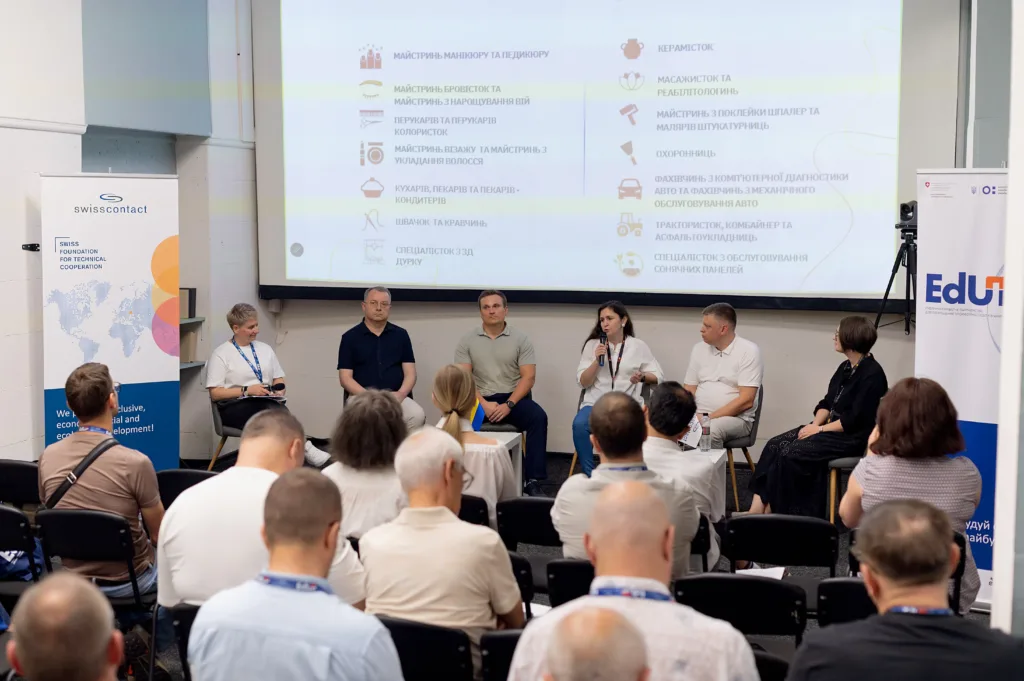
Such support helps women choose a realistic professional pathway and consider different forms of employment, including working for a company, self-employment, or starting their own business.
Professional adaptation of veterans
The return of veterans to professional life was another important topic of discussion.
Artem Honcharenko, Head of the Architecture of Resilience Institute for the Reintegration, Rehabilitation and Professional Development of Veterans at the Kyiv National University of Construction and Architecture, emphasised that career choices should take account of a person’s health and the consequences of injuries:
“The first step is to assess the veteran’s health. They may be experiencing the consequences of blast injuries or traumatic brain injuries, partial hearing or vision loss, epilepsy, or reduced mobility.
A person may be able to work, but the workplace, workload, and schedule must correspond to their capabilities. Without such an assessment, it is difficult to choose the right professional direction and ensure sustainable employment.”
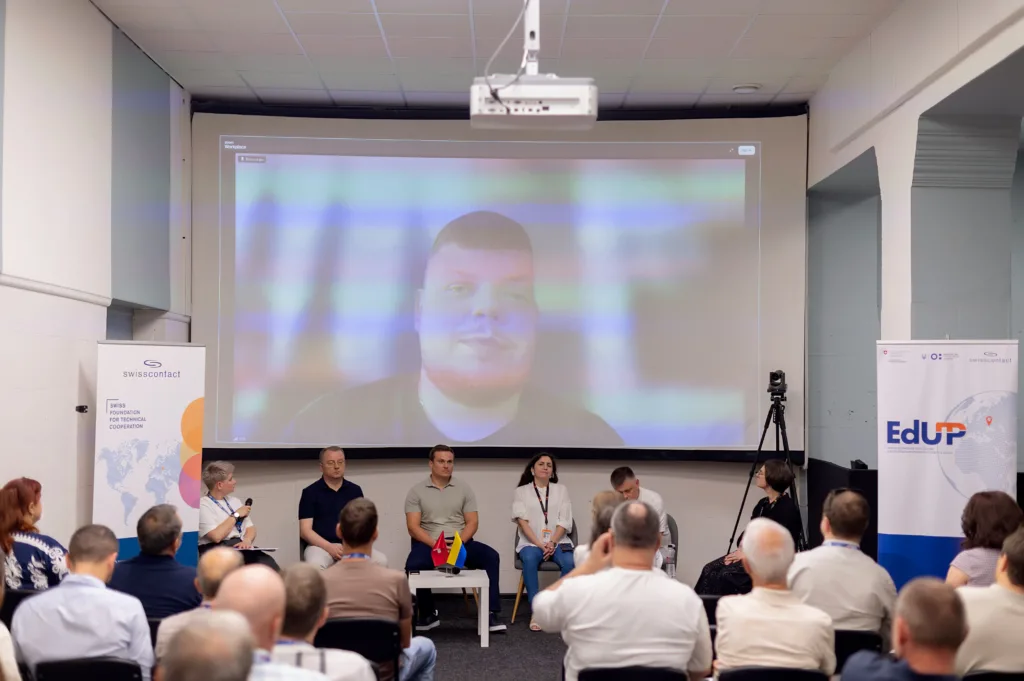
He also stressed that employers need guidance on adapting workplaces and organising support for veterans:
“A company should recognise a person’s professional skills and understand what conditions will enable them to work safely. This may involve an adapted workplace, a different schedule, an adjusted workload, or the opportunity to continue rehabilitation.
Such cooperation is particularly important in regions where access to comprehensive support remains limited.”
How to validate skills acquired through practical experience
Professional adaptation often concerns people who already have experience but cannot confirm it with a diploma or certificate.
Ihor Haiduk, Head of the Qualification Centres Department at the Secretariat of the National Qualifications Agency, explained the opportunities offered by qualification centres:
“A person may perform a job well but have no document confirming their qualification. A qualification centre assesses their knowledge and practical skills. After successfully completing the procedure, the person receives a document that officially confirms their professional qualification.”
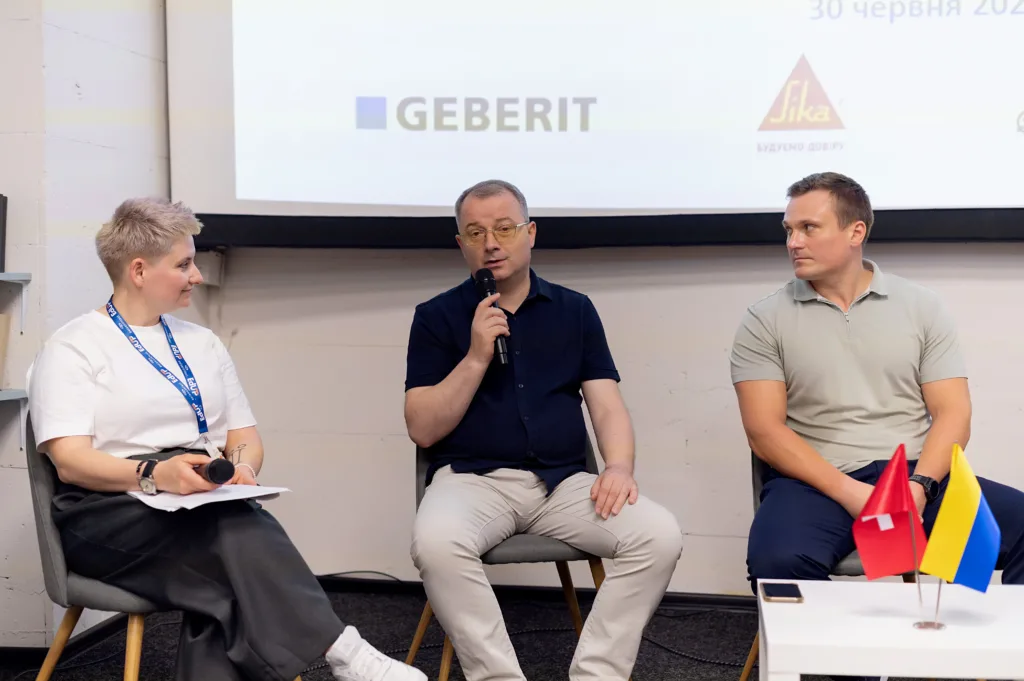
This mechanism can be useful for employees who learned directly in the workplace, acquired a profession independently, or completed short-term training.
“The labour market is changing, and throughout their lives people will acquire new professions and validate skills gained through practical experience. This requires professional standards and accessible qualification centres in the regions,” Ihor Haiduk emphasised.
Inna Shkrabii, a representative of DTEK, continued the discussion from the perspective of a major employer. She outlined the staffing needs of technical industries and the importance of practical training.
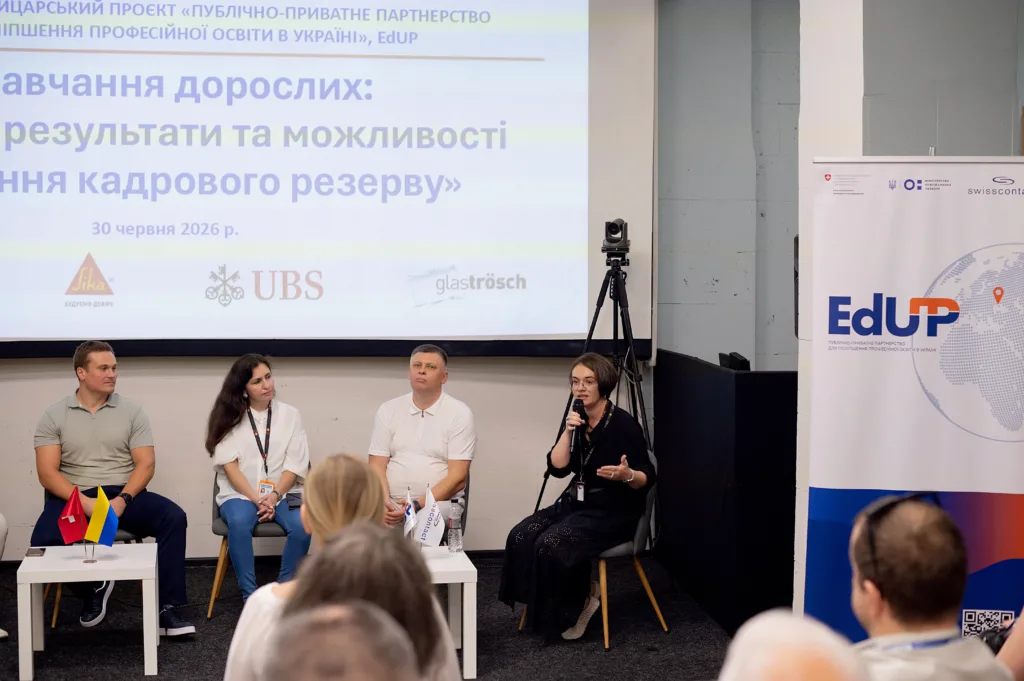
Companies need graduates who can operate modern equipment, comply with occupational health and safety requirements, understand workplace discipline, and are prepared to continue learning on the job.
Business involvement in programme development and practical training helps prepare professionals for specific production tasks.
How the programmes operate in vocational education institutions
Practical experience was presented by the Kyiv Vocational College of Civil Engineering and the Kharkiv Vocational College of Construction and Industry.
Representatives of the institutions described how adult education programmes in welding and plumbing systems installation were organised. The programmes included extensive practical training, work with tools and equipment, and the study of modern materials and technologies.
Companies also contributed to the training process by providing expertise, introducing participants to industry requirements, and helping align training tasks with real working conditions.
A new professional chapter for graduates
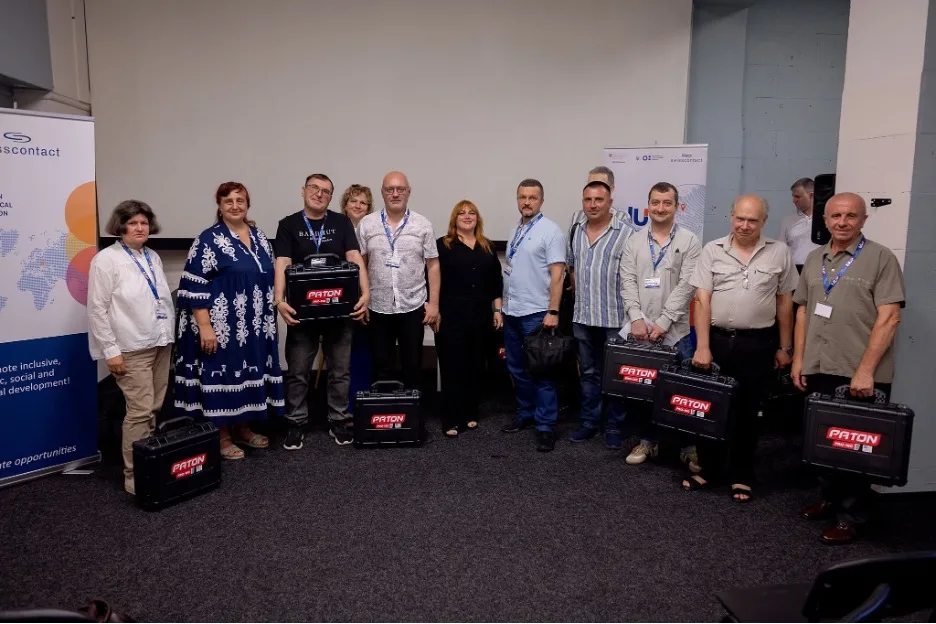
The final part of the event featured a formal certificate award ceremony for graduates of training programmes in welding and plumbing systems installation.
Each graduate also received a professional toolkit to support their future work. The equipment will help them apply their new skills after completing the course, whether during an internship, at a company, while starting their own business, or when carrying out their first professional assignments.
The event demonstrated that adult education can become an effective tool for building a talent pool when people are supported through a consistent pathway that includes career guidance, practical training, assistance during adaptation, qualification validation, and direct contact with employers.
For Ukraine, which is simultaneously resisting the war and preparing for large-scale recovery, the development of such models is an investment in people, economic resilience, and the ability of businesses to operate and grow.
The “Public-Private Partnership for Improved Vocational Education in Ukraine” project is implemented with the financial support of the Government of Switzerland through the Swiss Agency for Development and Cooperation and private-sector partners. It is implemented by the Swiss Foundation for Technical Cooperation, Swisscontact, with the support of the Ministry of Education and Science of Ukraine.
Information support for the project is provided by the Confederation of Builders of Ukraine, which facilitates the participation of its members in project activities, and ProfBuild magazine, the project’s media partner supporting the development of vocational education and covering key developments in Ukraine’s construction sector.