
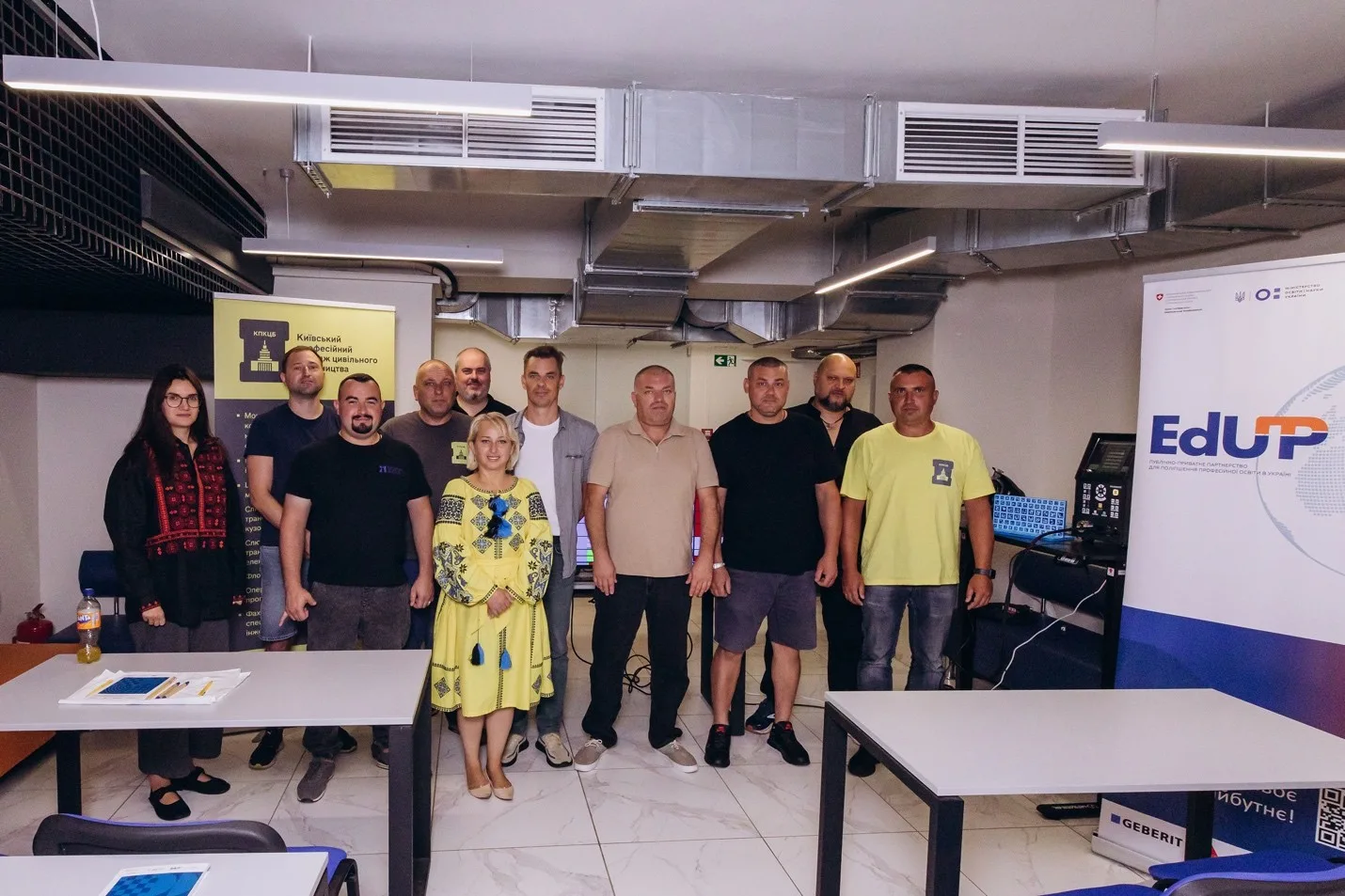
As part of the EdUP project, the Kyiv Vocational College of Civil Engineering received a modern augmented reality-based solution for welder training. To ensure that the new equipment became a fully integrated part of the learning process, teachers and vocational training instructors completed hands-on training in its use on 25–26 August.
This training supports EdUP’s broader objective: to bring vocational education closer to the real needs of Ukrainian companies and equip students and adult learners with the skills they need to move more quickly from the training workshop to the workplace.
Russia’s full-scale war has significantly changed Ukraine’s labour market. Some specialists have relocated, others have joined the Defence Forces, and companies continue to operate amid workforce shortages. At the same time, the country needs skilled workers for manufacturing, construction, repairs, and the restoration of housing and infrastructure.
In this context, technical professions have become even more important. Welders are specialists whose work determines the quality of metal structures, equipment, and manufacturing and construction processes. Companies need qualified professionals now, while strong professional skills create broader opportunities for employment and competitive pay.
This raises a very practical question for vocational education: what skills will a person bring to a company, and how much time will an employer need to prepare them for the realities of the job?
Safe Practice First, Real Metal Next
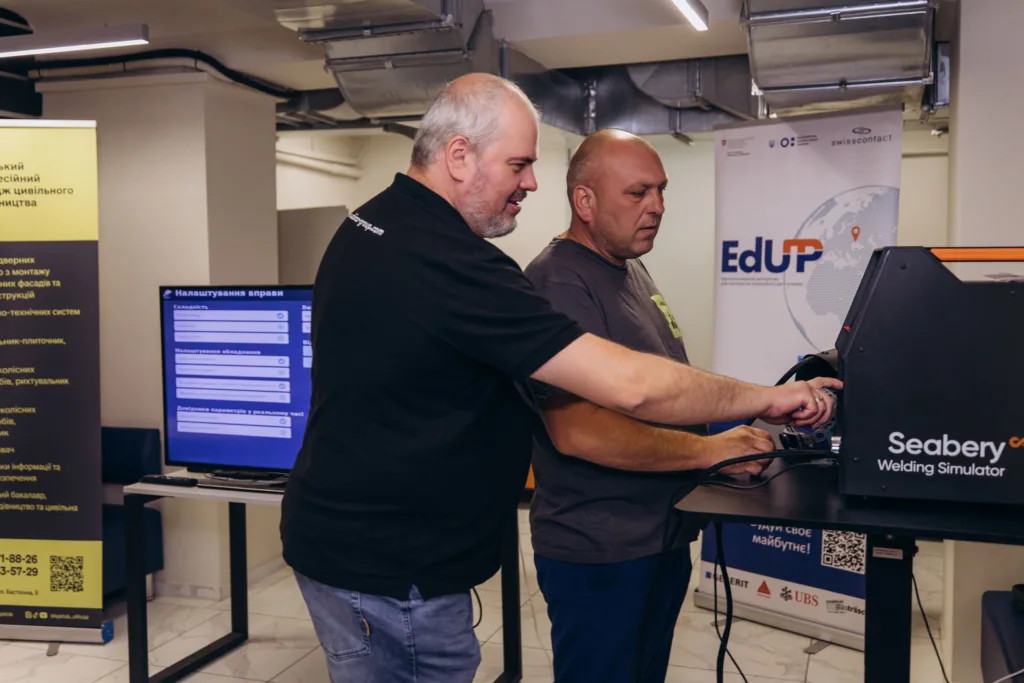
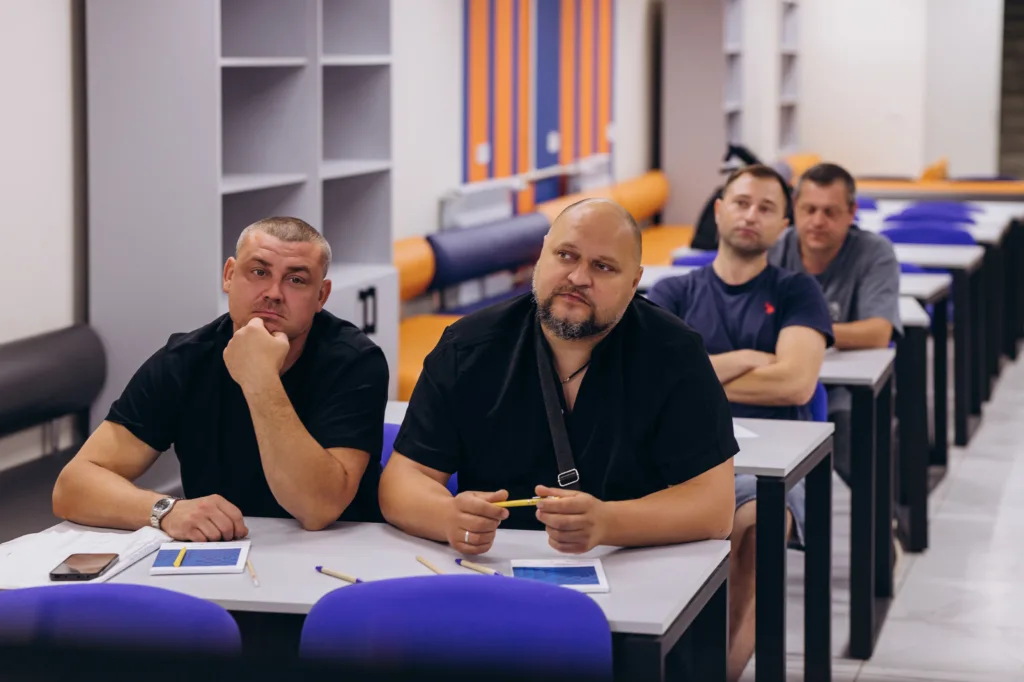
The two-day programme focused on mastering augmented reality technology for teaching welding. Participants learned how to operate the system, create learning modules, and use it to help students develop professional skills.
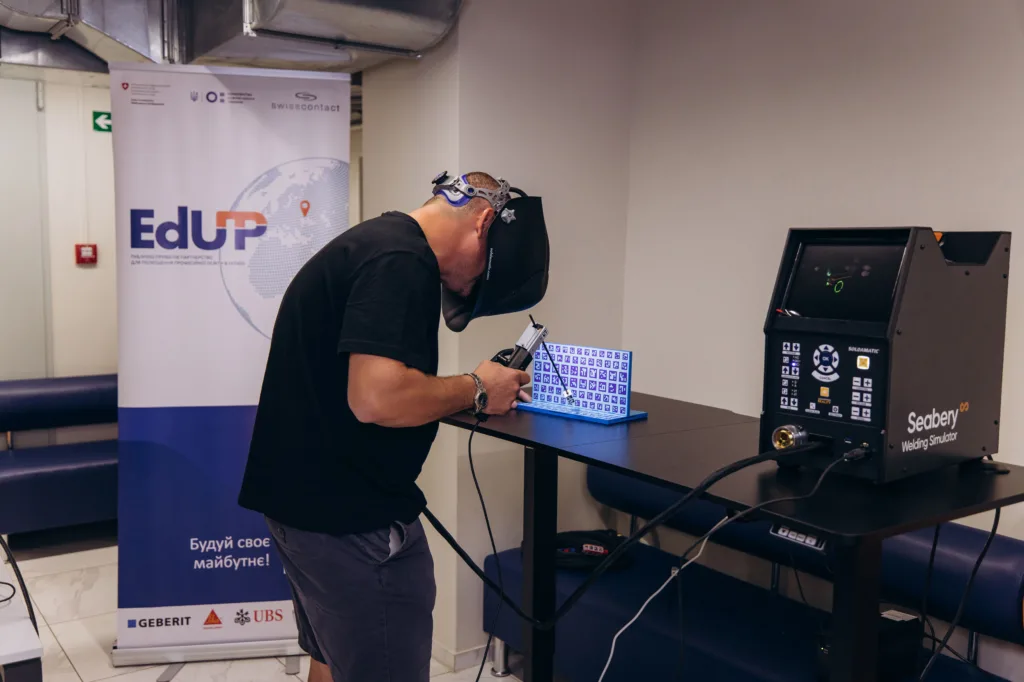
For someone learning to weld for the first time, moving straight to real equipment can be challenging. They must simultaneously control hand position, angle, travel speed, distance, and other parameters while working at high temperatures and following safety requirements.
Augmented reality technologies allow learners to practise these movements in a controlled digital environment first.
“An augmented reality training simulator is, above all, about safety. When students use real welding equipment for the first time, they face risks such as ultraviolet radiation, burns, and contact with welding wire. The simulator allows them to first practise their movements, hand position, and key parameters, build muscle memory, and only then move on to real welding,” explains Andrii Novikov, Commercial Director at ABICOR BINZEL Ukraine and an instructor on the training programme.
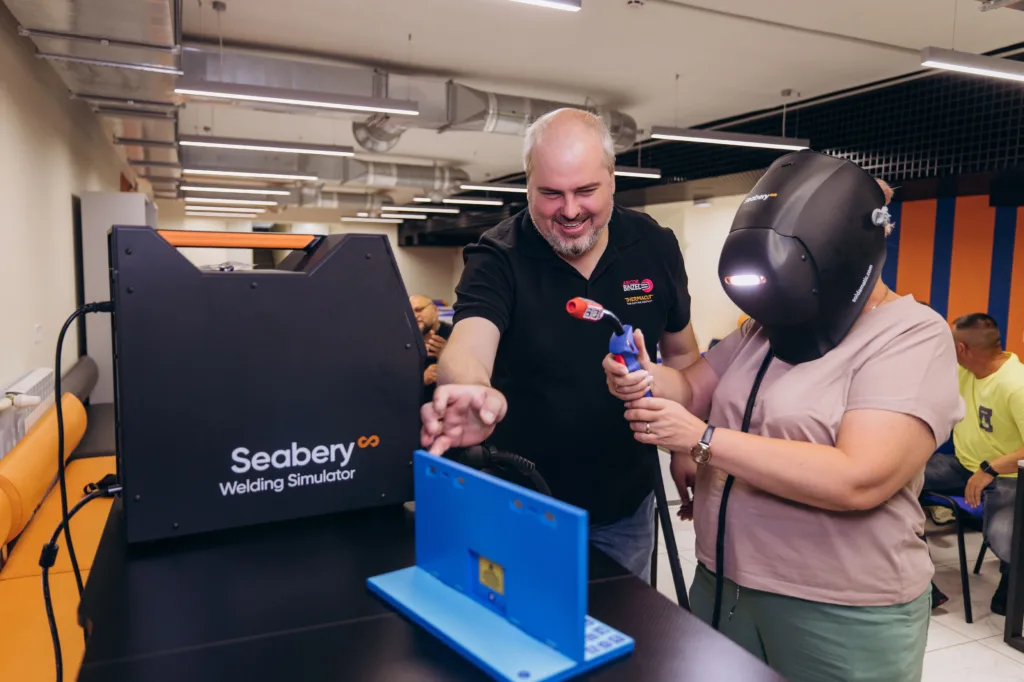
The simulator does not replace practice with real metal and welding equipment. Its value lies in preparing learners for that practical work by giving them time to develop basic coordination, understand the technological process, and learn to identify their own mistakes.
Mistakes Can Be Spotted During Training
The digital format makes it possible to structure learning step by step, from theory to practical assignments.
An instructor can create a learning module in which students first study the theory, complete a test, and then move on to the practical component. Each participant has an individual profile, can view their results, and can repeat an assignment until they reach the required level.
During virtual welding, the system records the parameters of each exercise. This helps students understand what they are already doing well and which specific movements or elements of their technique need more practice.
“Students can see their results and work separately on the parameters they are still struggling with. They can track their progress, repeat the exercise, and move on once they have earned the required number of points,” says Andrii Novikov.
For an educational institution, this approach offers another practical advantage. The first dozens of repetitions can be completed without using metal, welding wire, shielding gases, or other consumables. Electricity consumption is also reduced. Real resources are used at the stage when students have better control of their movements and understand the sequence of operations.
This gives learners more time to practise while allowing the training workshop to use its resources more efficiently.
The Equipment Will Remain at the College and Be Used with Students
For EdUP, it is important that the technology continues to be used after the project ends.
The EdUP project purchased an augmented reality training simulator and transferred it to the Kyiv Vocational College of Civil Engineering for permanent use in the learning process. The next step was to train the teachers and vocational training instructors who will integrate the simulator into classes for students and vocational training programmes for adults.
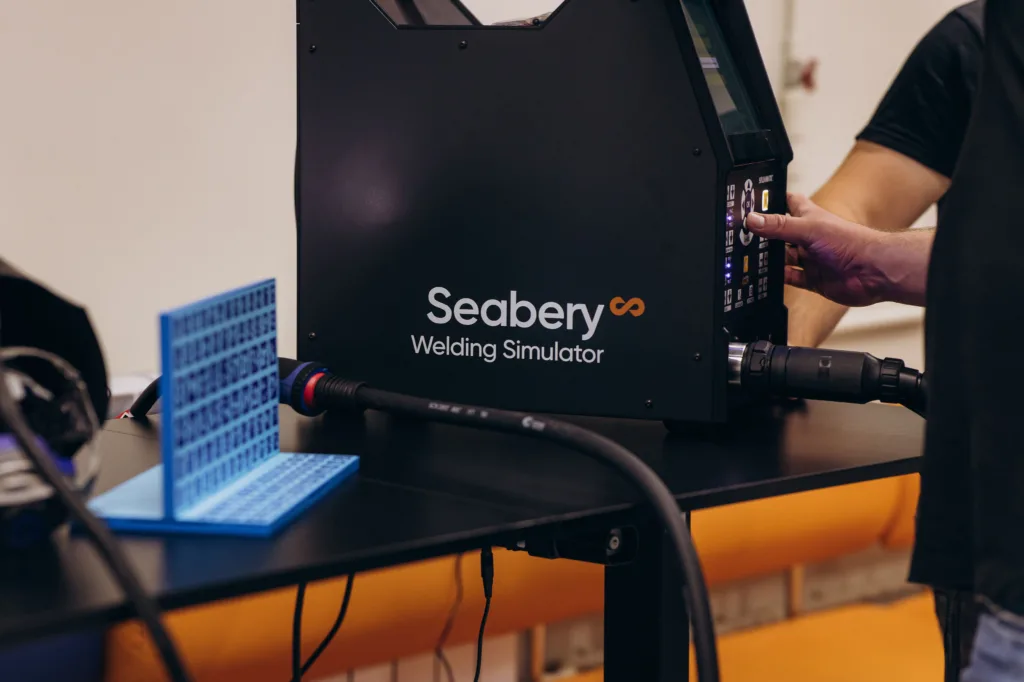
Modern equipment alone does not improve the quality of education. It also requires an instructor who understands its capabilities, knows how to design a learning module, and can combine digital training with real-world practice.
Volodymyr Hurich, a vocational training instructor at the Kyiv Vocational College of Civil Engineering, says the simulator will become part of the college’s everyday work with learners:
“We already have this simulator, and the training will help us use it properly in the future, both in vocational training classes and in career guidance activities. At first, students may be afraid to approach real equipment because they understand the risk of burns or other injuries. Here, they can safely practise fine motor control, angles, and the movements welders need.”
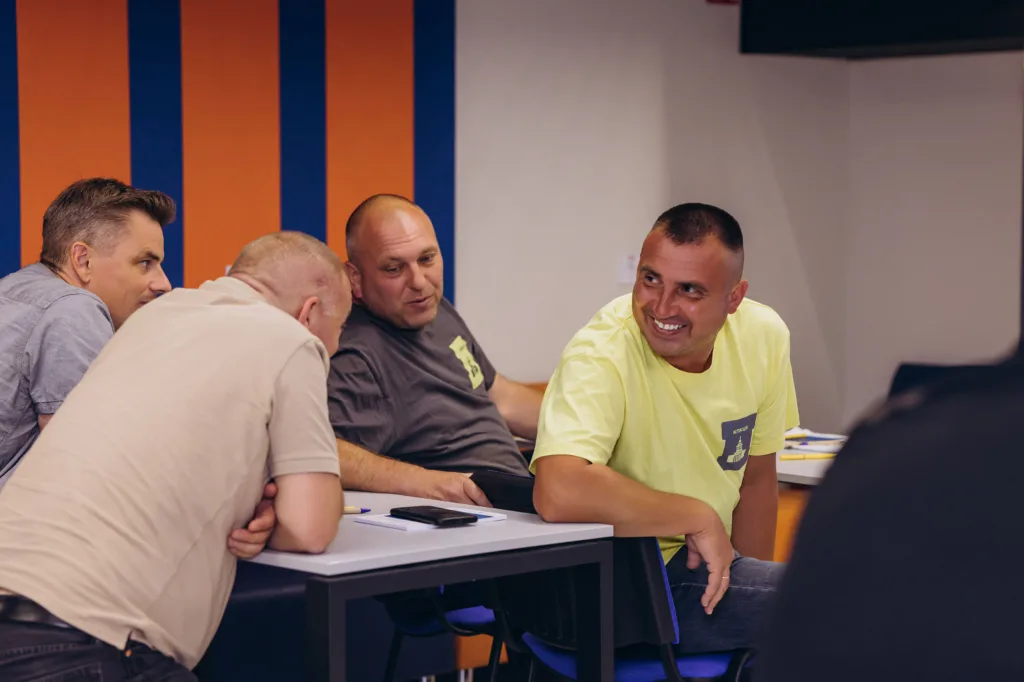
The equipment will also be used in the college’s short-term vocational training programmes for adults.
“We did not have this type of equipment during our previous courses. Now we will also use it to train adults. With the simulator’s prompts, learners can better understand their mistakes, develop more skills, and move on to practical work better prepared,” adds Volodymyr Hurich.
What This Means for Employers
For companies, the level of an employee’s qualifications remains the decisive factor.
Employers need people who understand the technological process, follow safety requirements, can control the quality of their work, and are ready to use professional equipment with confidence.
Digital simulators therefore make sense when they are combined with real-world practice. Students first develop basic movements and learn to analyse their mistakes, then practise these skills on real equipment and gradually move closer to actual production conditions.
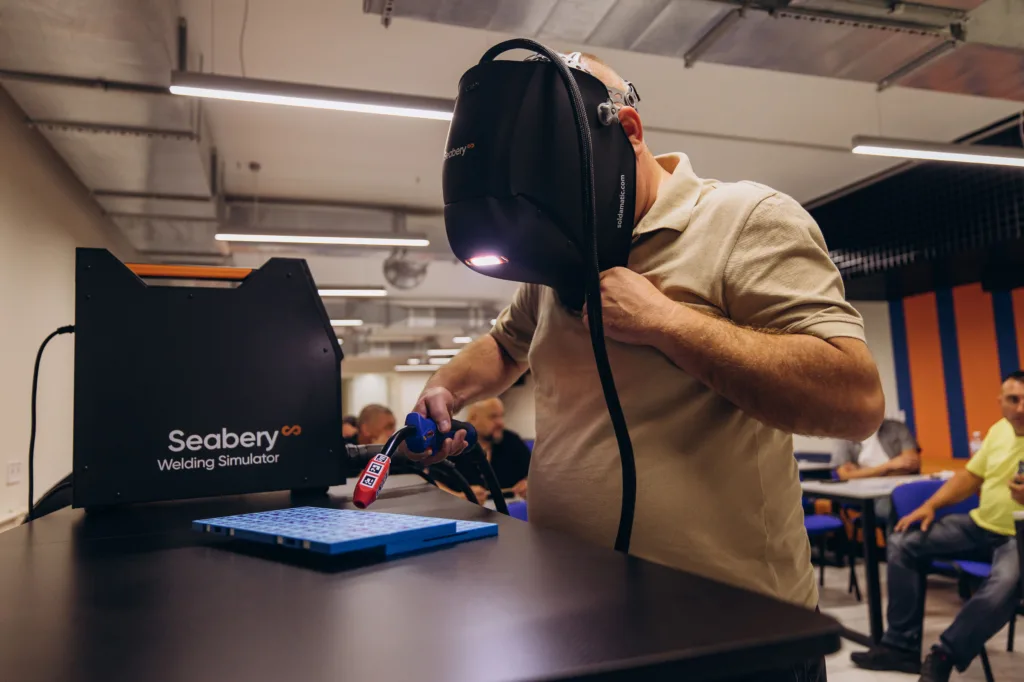
An augmented reality training simulator also allows learners to explore modern welding parameters and processes, even when certain types of industrial equipment are not yet available in the training workshop.
For companies, the outcome of this training can be very practical: less time spent explaining the basics after recruitment, faster onboarding for new employees, and a better understanding of the requirements of modern production.
This is particularly valuable amid workforce shortages. Companies need specialists who can quickly become productive, while vocational education institutions need to understand which competencies those specialists will require beyond the training workshop.
From Equipment to Partnership Between Education and Business
In this model, the interests of vocational education and business are directly connected.
Companies are the first to see how technologies, equipment, and workforce requirements are changing. Educational institutions must translate this demand into relevant practical training. EdUP helps build this connection by upgrading training infrastructure, providing modern equipment, strengthening instructors’ qualifications, and engaging private-sector expertise.
For employers, this cooperation creates an opportunity to help shape their future talent pool before graduates submit their first CVs. Through technological expertise, work placements at companies, participation in curriculum development, and direct dialogue with instructors, businesses can help vocational education institutions prepare people for real production processes.
For Ukraine during the war, this issue extends far beyond any single educational institution.
Production must continue today. Damaged buildings and infrastructure need to be restored. After the war ends, the scale of this work will grow even further. Behind every new facility, production line, or metal structure will be people who know how to do their jobs well.
Investing in modern vocational education is therefore an investment in the workforce capacity of Ukrainian businesses and the country’s future recovery.
The training took place on 25–26 August at the Kyiv Vocational College of Civil Engineering. The programme included hands-on work with an augmented reality training simulator, a final assessment, and an introduction to the college’s learning environment.
We thank ABICOR BINZEL for supporting the training and providing expert input.
_____
The Public-Private Partnership to Improve Vocational Education in Ukraine project (EdUP) is funded by the Government of Switzerland through the Swiss Agency for Development and Cooperation and private-sector partners. It is implemented by Swisscontact with the support of the Ministry of Education and Science of Ukraine.